Back to Insights
Analysis
June 18, 2026
Philippine solar could close the renewable share gap in 2030
Modelling shows the 35% renewable energy target drives 3 GW of additional solar capacity, while underperforming coal units taken offline increases reliance on firm capacity and adds 1 GW of geothermal
Summary

The Philippines is rapidly expanding renewables to meet its 35% renewable generation target by 2030. In 2025, record solar growth and the country's first decline in coal generation in the recent decade are early signs of the shift.
Modelling shows the 35% target is only met when treated as a binding policy. Reaching this requires 3 GW of additional solar beyond the committed pipeline while increasing battery utilisation nearly fivefold.
Under a supply shock where underperforming ageing coal units are assumed offline, geothermal expands and remains at 90% utilisation, while subcritical coal remains below 50% nationally, displaced by lower-cost technologies in Mindanao and solar in Luzon.
Reaching 2030 with a resilient grid requires more than accelerating renewable deployment. Firm low-carbon capacity, storage, and transmission investment must be deployed on time before the ageing coal fleet becomes a chronic liability. Scenario Builder can test how different outage pressures and storage pathways reshape system costs and adequacy.
Solar is outpacing coal 5x over, but system adequacy remains under pressure
2030 is a milestone year for the Philippines' energy transition. The government is targeting 35% renewable energy (RE) generation through policies such as the Green Energy Auction Program (GEAP) and Renewable Portfolio Standards.
Early signs of the shift are already visible in 2025. The country recorded its first decline in coal generation in 2025, even as reliability concerns persist. On-grid coal generation fell 9.5% and imports dipped 3.8%, after utilisation more than doubled between 2016 and 2024.
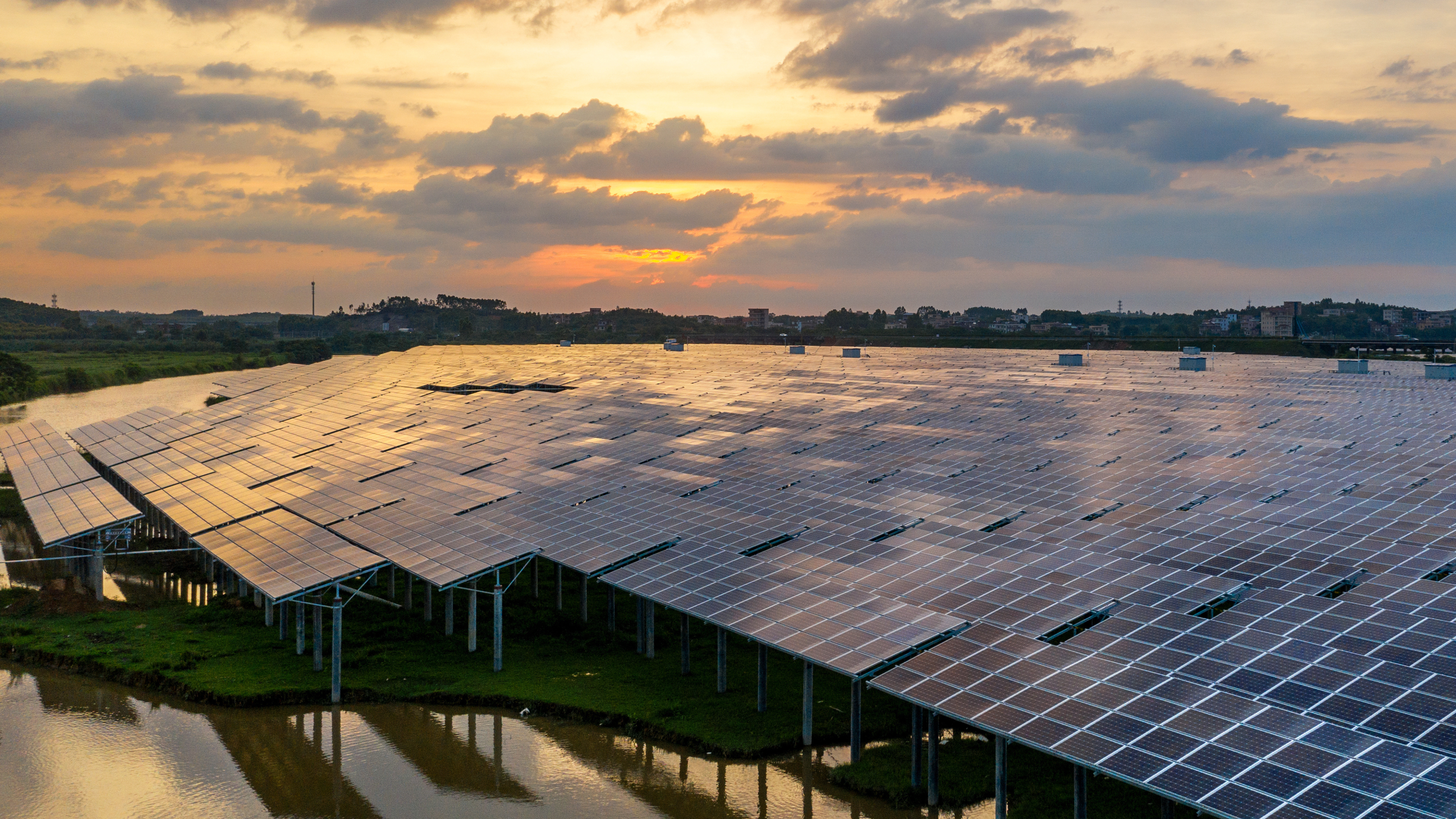
At the same time, solar is expanding at an unprecedented pace. Capacity and generation have more than tripled since 2023, growing around five times faster than coal since 2016.
In March 2026, the Philippines’ largest utility-scale solar project, MTerra Solar, began commercial power delivery to the grid. This marks an early step towards what is planned to become the world’s largest solar and battery storage project.
Developer interest suggests the solar momentum will continue. There are now 98 awarded solar projects, representing a combined pipeline of 9.88 GW.
By 2030, if all committed capacities come online on time on top of existing capacities, installed clean capacity (including solar, wind, geothermal, hydro, and pumped storage) is projected to surpass coal, reaching 18,539 MW against a coal fleet of 15,075 MW.
This marks a significant reversal from 2025, when coal led clean capacity by 2,474 MW. The projected turnaround of nearly 6,000 MW in five years is driven almost entirely by the solar buildout.
But adding capacity is not the same as fully utilising it. The renewable pipeline is entering a system that still depends heavily on imported coal. Ageing plants, outages, and transmission constraints continue to threaten system reliability. TransitionZero analysis has shown how coal tariff volatility and plant reliability issues push the system into a cycle of price shocks and outages.
Using policy targets and capacity commitments as a baseline, we stress-test the Philippine power system to 2030 in Scenario Builder.
We test whether the system can absorb coal supply disruptions while meeting demand and the 35% renewable share target. We also assess whether gaps between planned and required capacity leave the system vulnerable.
Model and scenario set-up
Model set-up
To assess adequacy under current policy commitments and coal performance pressures, we ran three scenarios for 2030 using Scenario Builder.
This analysis used dispatch modelling to test whether supply reliably meets demand at hourly resolution, with capacity expansion to identify the least-cost investments needed to meet any shortfall.
We started with a business-as-usual (BAU) reference and progressively introduced policy and supply-side constraints at a three-node level (Luzon, Visayas, and Mindanao).
- Scenario 1 – BAU: Committed capacities by 2030 come online alongside existing capacities. Coal expansion is capped following the Department of Energy (DOE) moratorium on greenfield coal. No minimum RE target is imposed. This scenario shows where the system lands without any RE mandate, providing a baseline against which the 35% RE aspirational target can be assessed.
- Scenario 2 – Policy baseline: Coal expansion is capped under the moratorium policy, while other thermal and RE capacity remains unconstrained. The 35% minimum RE generation target is imposed across Luzon, Visayas, and Mindanao.
- Scenario 3 – Supply Shock: Building on Scenario 2, 1,138 MW of Luzon’s subcritical coal fleet is removed, covering Calaca (600 MW) and Quezon Power Plant (538 MW). These ageing units have frequently been flagged by the Energy Regulatory Commission (ERC) for derating. TransitionZero Coal Asset Transition (TZ-CAT) also identified them as potential retirement candidates based on PSA expiry, plant age, and outage history. In this scenario, the units are assumed to be offline, serving as a proxy for prolonged outages that can last close to a year. The 35% RE target is retained, testing how the system responds to a supply shock while still meeting policy targets.
Adjusted parameters:
For full details on the input data, please visit our documentation here.
An additional 3 GW of solar closes the 35% RE share gap
Across all scenarios, the model expands solar and geothermal capacity to meet demand by 2030.
The scenarios allow no new coal beyond the committed pipeline but leave other thermal and RE technologies unconstrained. The model still selects new RE capacity as the most cost-effective option for meeting demand and the RE target.
The model adds 431 MW of geothermal in Luzon, 232 MW in the Visayas, and 268 MW in Mindanao. Geothermal has major economic advantages: low running costs and high reliability as a continuous, clean baseload source.
Without an imposed RE target, the BAU results in an RE share of just 32%. In the policy scenario, 3 GW of additional solar in Luzon closes the gap and reaches the 35% target in 2030. Solar in Luzon alone meets 14% of the region's demand and accounts for 30% of the national RE target. For context, Luzon solar contributed roughly 11% of total renewable generation nationwide in 2025.
The policy scenario points to a future increasingly dependent on scaling solar in the country's largest demand centre. Building firm RE capacity like geothermal remains essential alongside it.
The model only reaches 35% when the policy target acts as a binding constraint. While solar investment continues to grow through new RE service contracts in 2026, the pace of deployment will ultimately determine whether the 2030 target is achieved.
The Philippines is already mandating Integrated Renewable Energy and Storage Systems (IRESS) to support higher renewable penetration. Beyond deployment, whether solar and batteries lower consumer costs will depend on future technology costs, contracting arrangements, and broader market dynamics, highlighting the need for further analysis and scenario testing.
The supply shock scenario also meets the RE target, adding 1 GW of geothermal (the highest across scenarios) alongside 2 GW of solar. However, this raises pressure on existing capacities and overall system reliability, which will be discussed in the following section.
Subcritical coal falls below 50%, but other firm technologies remain heavily utilised
Firm capacity utilisation remains consistently high across all three scenarios, with geothermal running at around 90% and most coal technologies remaining near 80%. The main exception is subcritical coal, whose utilisation falls from 48% in BAU to 43% under the policy scenario at a national level.
Notable variation across grids reflects differences in local supply mix. In Luzon, subcritical coal utilisation falls from 80% to 69% under the policy scenario as additional solar displaces thermal dispatch.
In Mindanao, subcritical coal is already marginalised at 16% utilisation, running near its minimum generation level across all scenarios. It is outcompeted by local hydro (running at 52%) and CFB coal (running at 80%), which carry lower short-run marginal costs.
Firm geothermal and coal capacity continue to underpin system adequacy across all scenarios. In the supply shock scenario, subcritical coal utilisation goes up to 80% as the remaining units are pushed to their availability limit as the system compensates for the 1,130 MW capacity removed.
The model assumes all capacity expected online by 2030 is fully available. In reality, outages and capacity deratings from coal and other firm plants could strain adequacy further. Future sensitivity testing on outages and capacity deratings could provide additional insights into adequacy risks.
Battery deployment accelerates under the RE policy scenario
Storage utilisation increased nearly fivefold in the policy scenario compared to BAU. Battery and pumped hydro cycling increased sharply, with a combined 624 GWh of dispatched energy.
Batteries in BAU remained largely idle at just 125 GWh of dispatch, while the supply shock scenario showed the lowest storage utilisation. Pumped hydro fell to nearly half of BAU levels. Battery activity also remained negligible. With fewer solar additions and nearly 3.8 TWh more geothermal generation than the policy scenario, the system in the shock scenario relied more on steady baseload output and less on variable solar generation. As a result, storage played a smaller role in balancing supply and demand.
In the March 2030 dispatch results of the policy scenario, batteries charged up to 1,300 MWh during the day under a 4-hour duration configuration. They then discharged up to 683 MWh during the evening peak, highlighting their role in shifting solar generation to periods of higher demand. Further analysis could help identify the optimal level of battery deployment to maximise the value of additional renewable capacity and assess potential curtailment risks.
2030 adequacy depends on timely RE rollout and reliable firm capacity
The analysis reveals two compounding gaps. The committed pipeline alone cannot close the renewable share gap without binding policy support and additional solar buildout. At the same time, replacing ageing coal capacity requires sufficient firm and flexible alternatives to maintain adequacy.
The RE pipeline has accelerated through auctions and policy support, but the 35% target risks remaining a paper commitment unless delivery keeps pace. Renewable Portfolio Standards compliance among mandated participants has remained slow.
Storage becomes more important as solar penetration rises. But prolonged supply stress still requires firm capacity to maintain adequacy during low renewable output. This highlights the long-term value of geothermal as a reliable source of firm low-carbon generation, though expanding capacity requires early planning due to long lead times, significant upfront investment, and exploration risks.
Meanwhile, the coal fleet is a growing reliability risk. Outages leave little room to absorb further disruption, and transmission bottlenecks — with major grid projects taking up to 10 years or more to complete — compound the problem further.
Imported fossil dependence and ageing coal expose the system to reliability, security, and price risks. As these pressures grow, renewables are becoming not just a climate solution, but a critical energy security and stabilisation strategy. Realising these benefits will require careful sequencing of variable renewables with supporting storage, firm low-carbon capacity, and grid investments, while delivering a reliable and affordable transition for consumers.
Build your own scenario
The analysis operates at three nodes, focusing on exploring macro-level implications. This allows users to test how different levels of coal capacity removal at technology level affect the system-wide generation mix, costs, and investment needs.
Users can explore how dispatch responds to outage pressures, minimum generation requirements, and storage deployment. Each scenario can be further evaluated for its system-wide cost impact.
Try Scenario Builder and build your own dispatch model for the Philippines.