Back to Tech Blog
Technology
December 12, 2025
Neptune Days: highlights from our latest innovation sprint
Summary

Neptune Days are TransitionZero’s take on hackathons — two days set aside for team members to explore creative, cross-functional ideas that support our mission, but which are outside of the core roadmap.
This round highlighted major advances in automated modelling workflows, resilient system analysis, and next-generation visualisation.
The results all demonstrate TransitionZero’s push toward faster, smarter, and more transparent energy analytics.
What are Neptune Days?
Neptune Days are two-day innovation sprints, you could call them our take on hackathons. Two days set aside for experimentation, collaboration, and rapid prototyping outside the constraints of our core roadmap. In astrology, the planet Neptune represents creativity and inspiration, and our Neptune Days are designed to let our curiosity and imagination take the lead, giving the team space to test new ideas and technologies across our internal tools and existing products.
This Neptune Days event highlighted major advances in automated modelling workflows, resilient system analysis, and next-generation visualisation.
The projects
In Q4 of 2025, TransitionZero team members narrowed down over a dozen ideas to a handful of workable projects, which were then rapidly prototyped and presented to the rest of the company.
Testing power system resilience under a changing climate
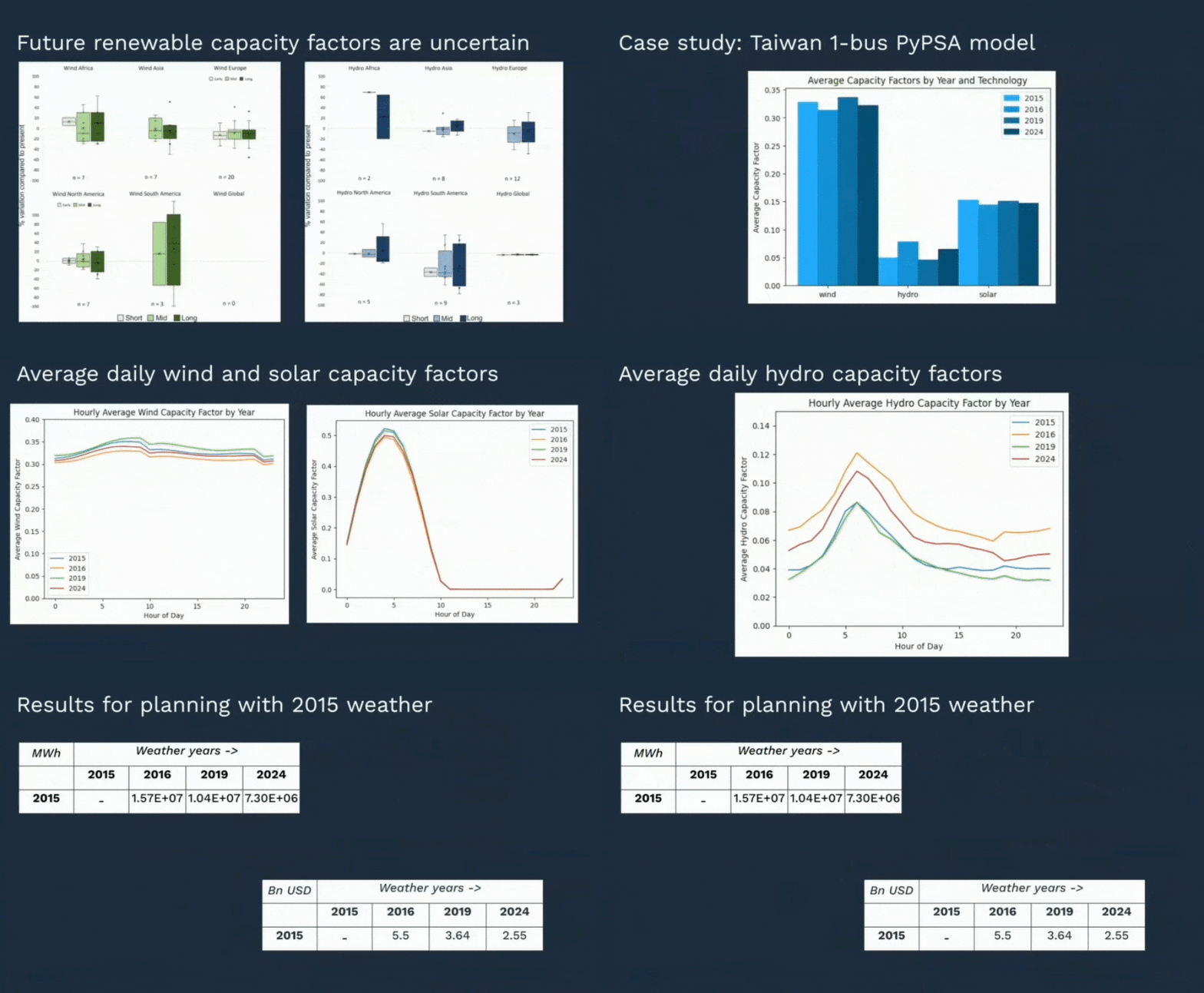
Energy system plans are sensitive to the uncertainty of future climate and weather patterns, something this team explored using a PyPSA model adjusted with capacity factors from five distinct weather years. Their workflow involved planning a system on one year’s data, fixing the resulting capacities, and evaluating performance against other years, with unmet demand as the critical metric. The results show that the choice of planning year can dramatically affect long-term reliability, with mismatches translating into billions in economic losses, which underscores the need for climate-robust modelling practices.
Ingesting PyPSA network files into Scenario Builder
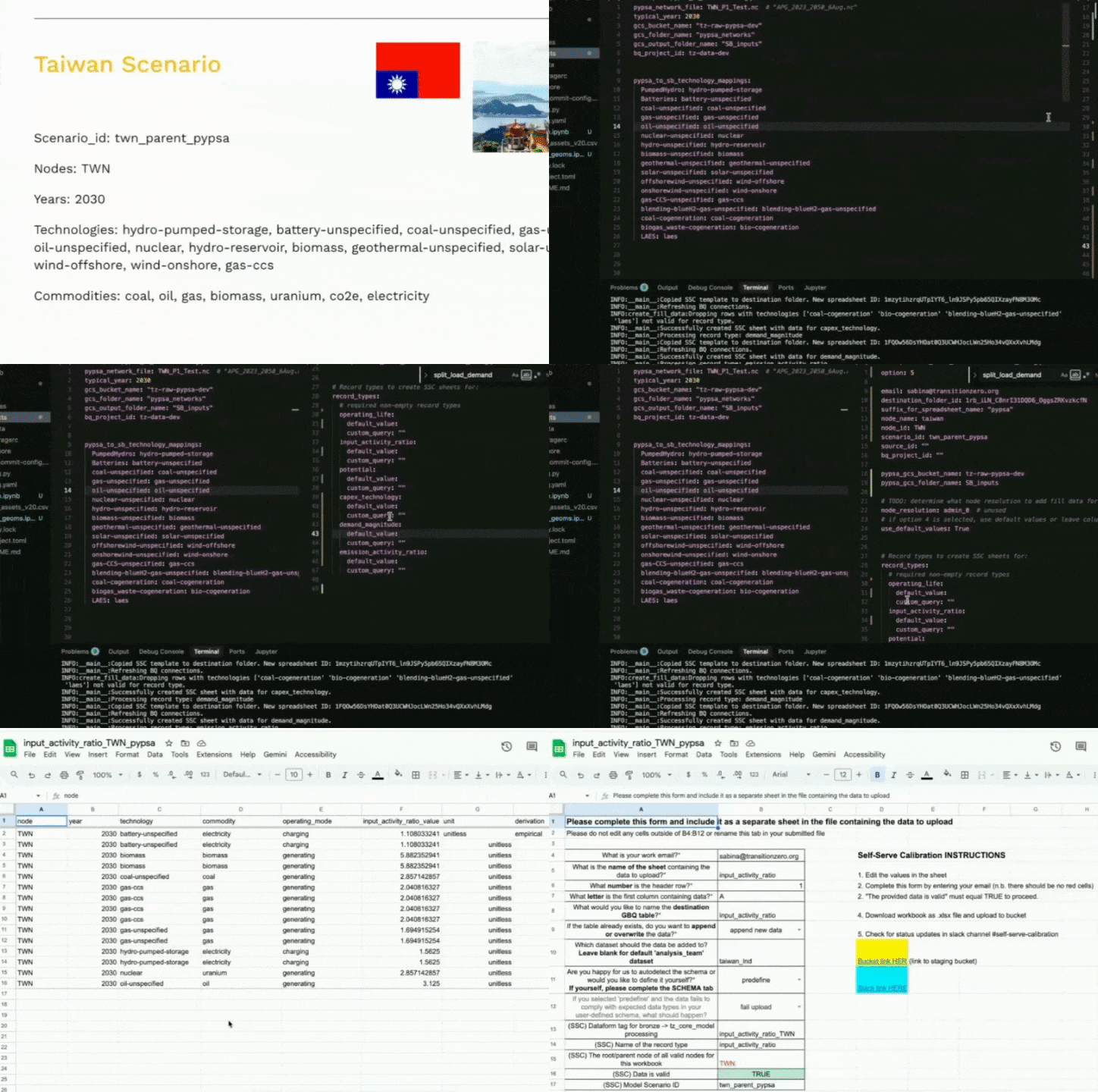
This project explored interoperability by creating a generalised script that converts any PyPSA network into a data model compatible with Scenario Builder. Successfully tested on a Taiwan network, this pipeline builds on earlier work and opens the door to a fully automated ingestion workflow. The team also developed a complementary tool that formats the data into standard sheets, enabling easy editing of model inputs and increasing the flexibility and speed of scenario calibration.
Faster, flexible visualisation in Scenario Builder
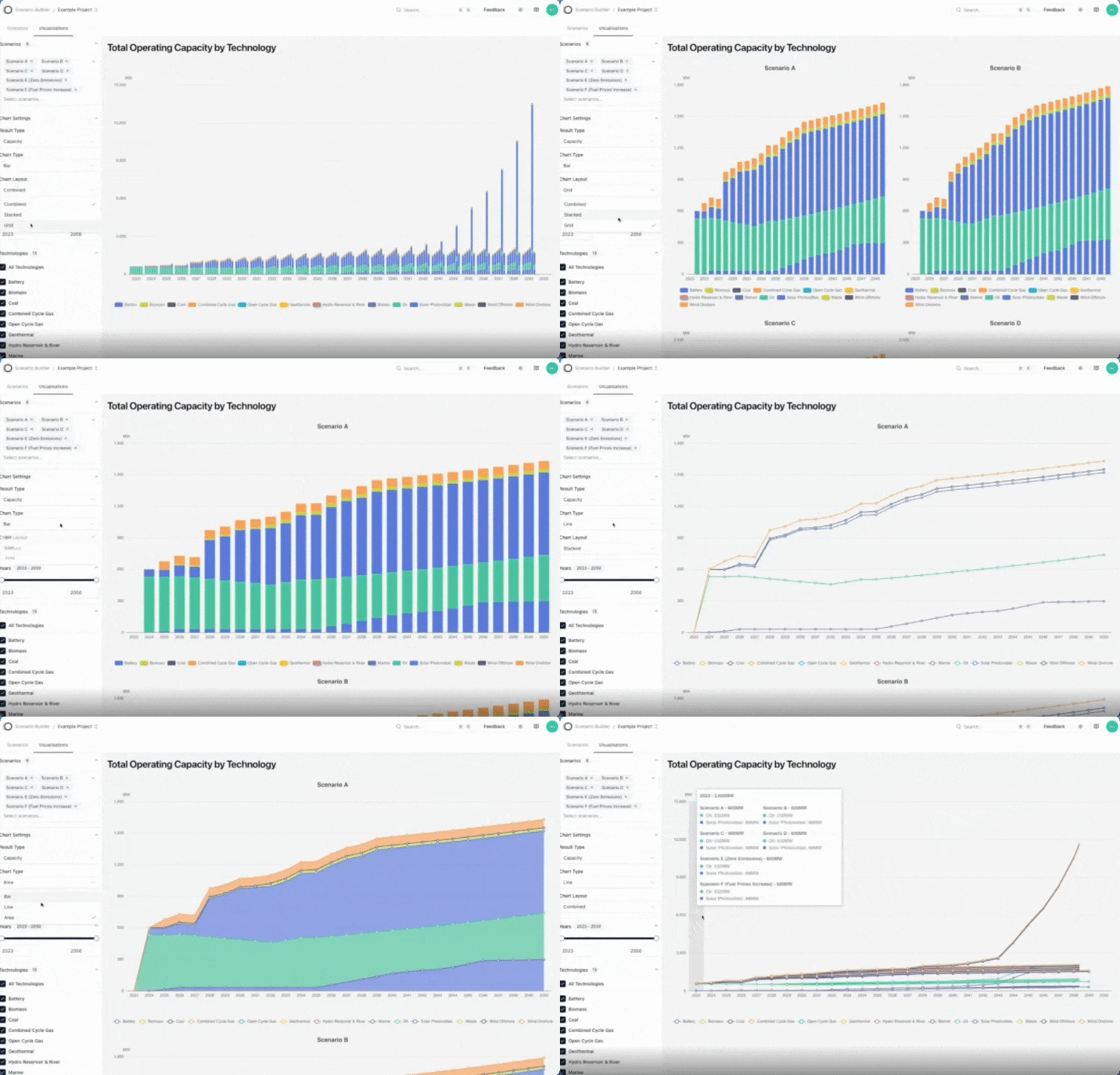
This project team developed a proof of concept that dramatically expands Scenario Builder’s visual exploration capabilities, drawing inspiration from analytics platforms like Tableau. The enhanced interface allows users to compare up to ten scenarios at once, switch fluidly between line, area, and bar charts, toggle grid or stacked layouts, and filter results by technology or year. By using a high-performance canvas-based charting library and introducing persistent, custom visualisation setups stored locally, the prototype shows how Scenario Builder could evolve into a more interactive and intuitive analysis tool.
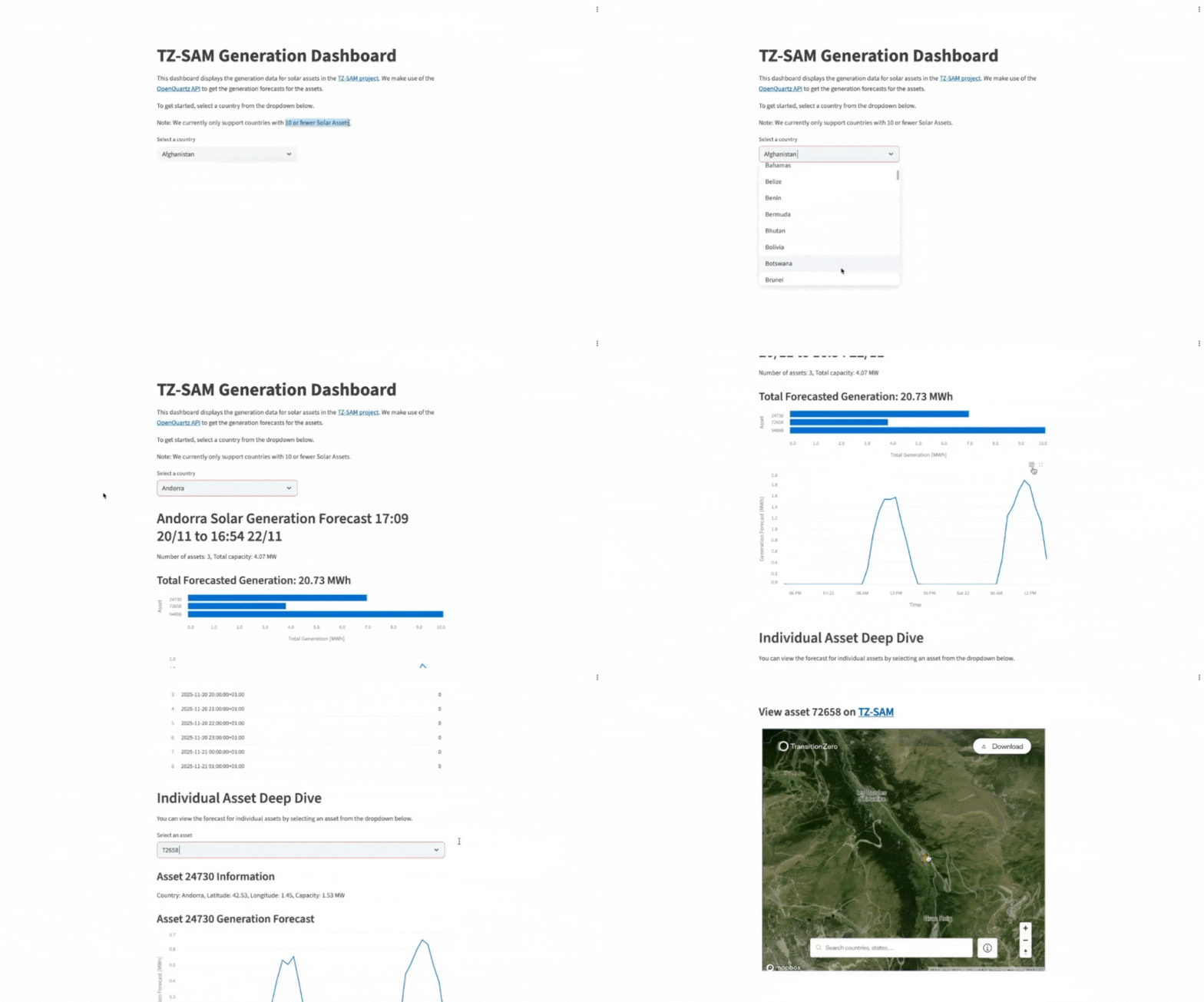
Forecasting global solar generation with open data and lightweight tools
The second team created a new solar forecast dashboard, combining the Solar Asset mapper (TZ-SAM) dataset with the open-source Open Climate Fix’s quartz forecasting tool to estimate global solar generation 48 hours ahead. This proof of concept demonstrates that powerful products can be developed quickly with the help of systems and tooling such as DuckDB for data processing, and Streamlit for visualisation. The team emphasised that the solution is highly scalable and could be expanded rapidly with closer collaboration from Open Climate Fix.
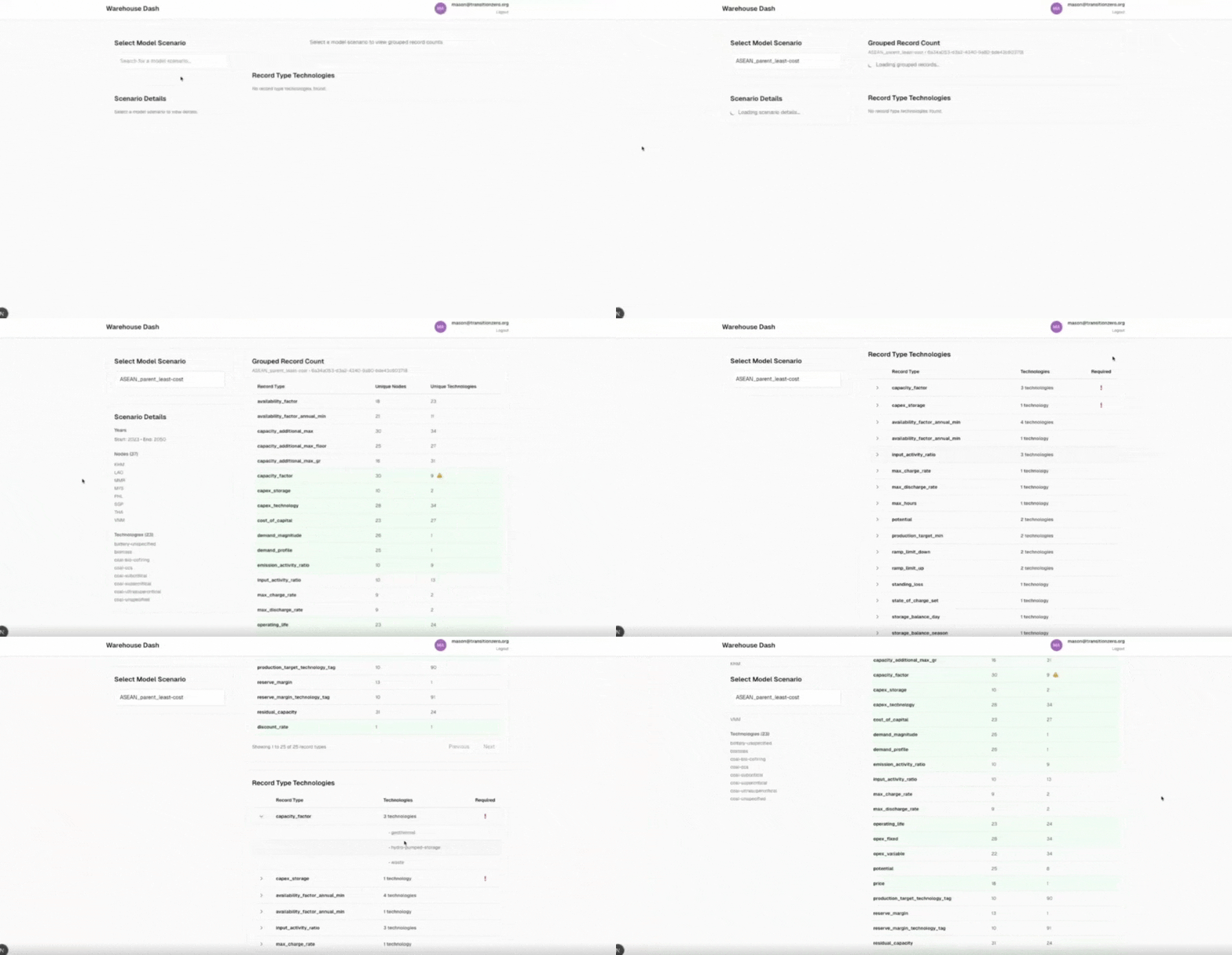
Instant insight into scenario data coverage
Dashboards were a bit of a theme… this one helps users quickly identify which data is available for different model inputs, countries, and scenarios — replacing a laborious process formerly reliant on complex SQL queries. The team was able to develop this idea by deploying a Vercel app connected to the Scenario Builder staging database. The demo showcased automatic detection of missing inputs such as discount rates or geothermal technologies, turning what was once a tedious manual task into a streamlined, visual inspection.
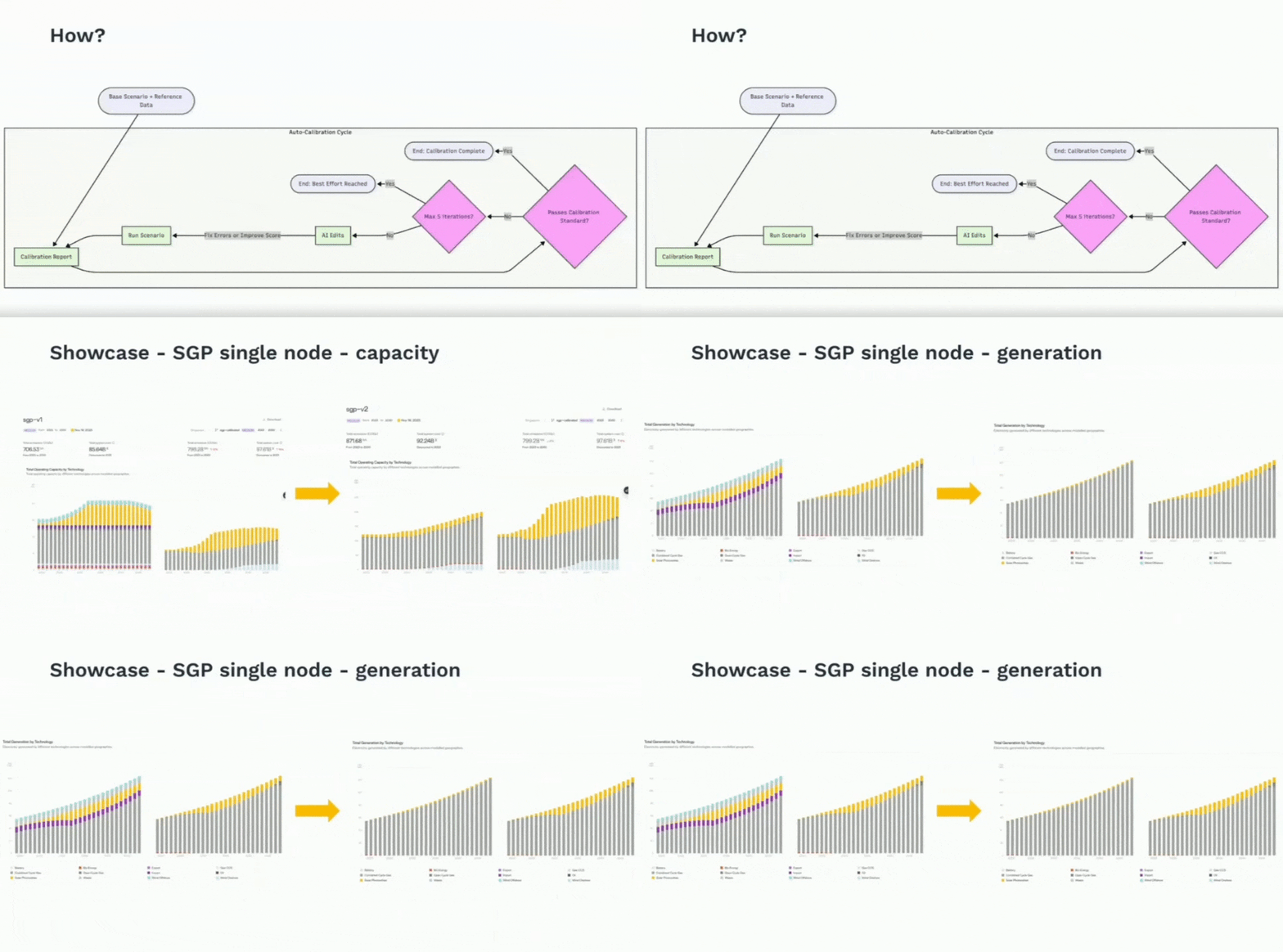
Autonomous calibration: teaching models to adapt themselves
To address the persistent challenge of aligning optimisation model outputs with real-world energy-market behaviour, this team developed and presented an autonomous calibration system built around TZ’s AI-driven modelling capabilities. By looping a scenario calibration report generator with automated scenario editing, the system aims to replicate the current painstaking manual calibration process at scale. Early results from a single-node Singapore model show that the autonomous loop approximates human-calibrated capacity and generation outcomes closely, especially in the crucial first years, pointing to a promising path for model self-correction.
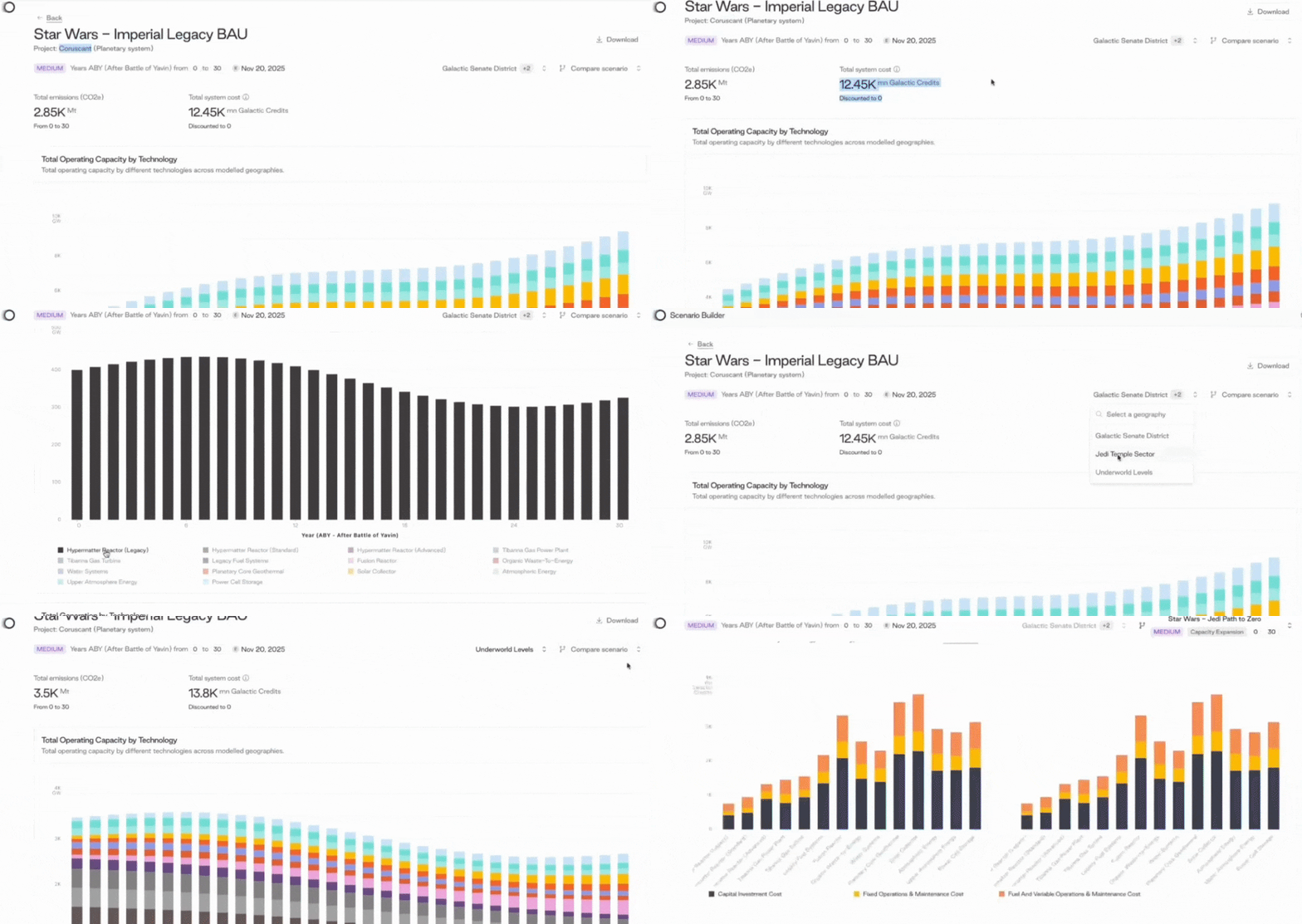
Star Wars and Scenario Builder: having fun with fictional worlds
In this more creative application, the team used Scenario Builder to craft fictional sci-fi scenarios set on the planet Corusant from the Star Wars universe, complete with invented technologies, as part of a Marcomms initiative to showcase the breadth and strength of the platform’s outputs in a fun way. The visualisations demonstrated cost pathways, system geography, emissions, and cross-scenario comparison in an engaging, narrative-driven format.

Guiding users through Scenario Builder with integrated walkthroughs
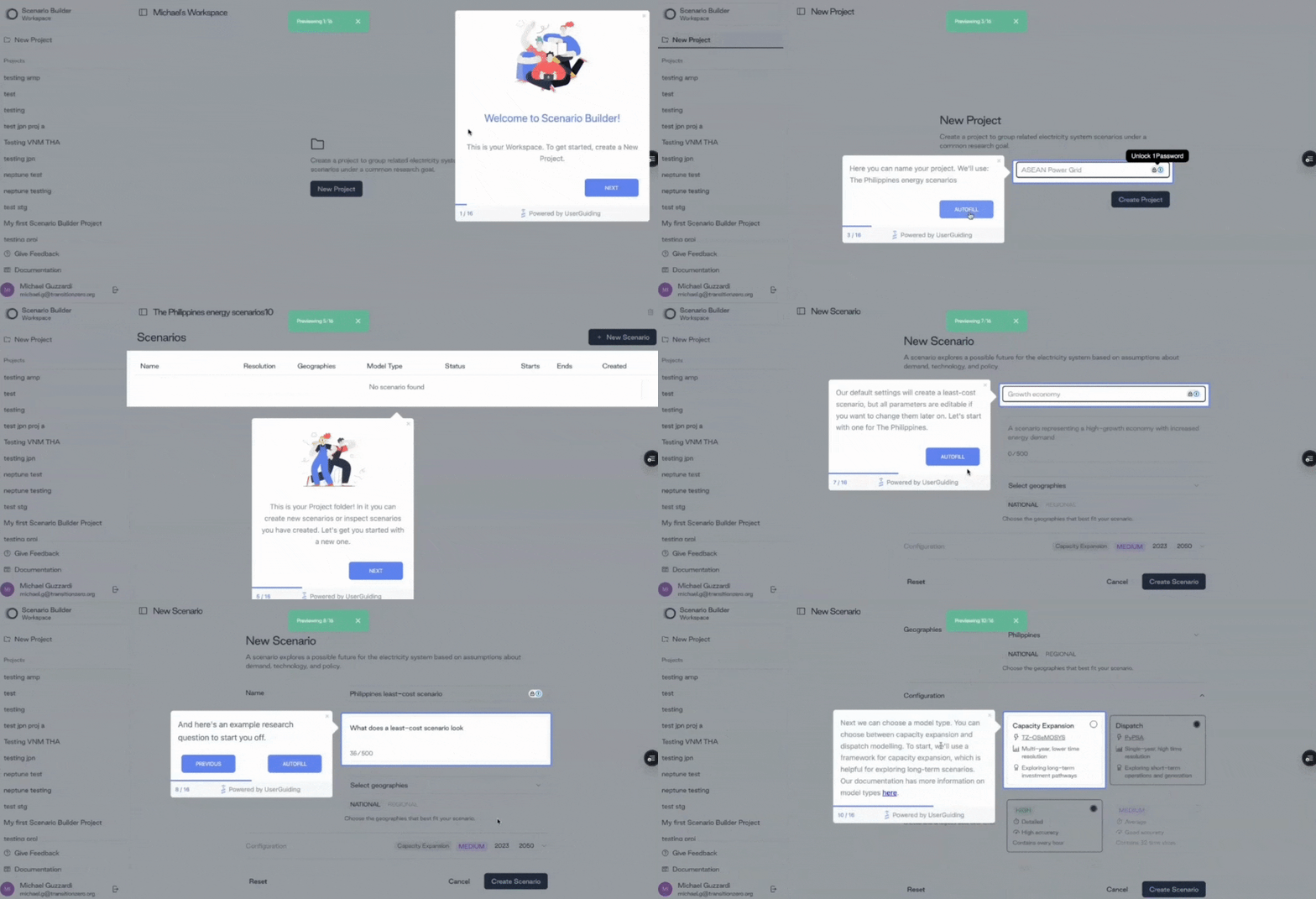
This team piloted interactive Scenario Builder user guides using a lightweight no-code onboarding tool. The demo walked new users through creating a project, selecting geographical and temporal resolution, and running a basic least-cost scenario for the Philippines as an example, all with the intention to transform new users to confident modellers even faster.
A marketplace for public scenarios: the TransitionZero registry
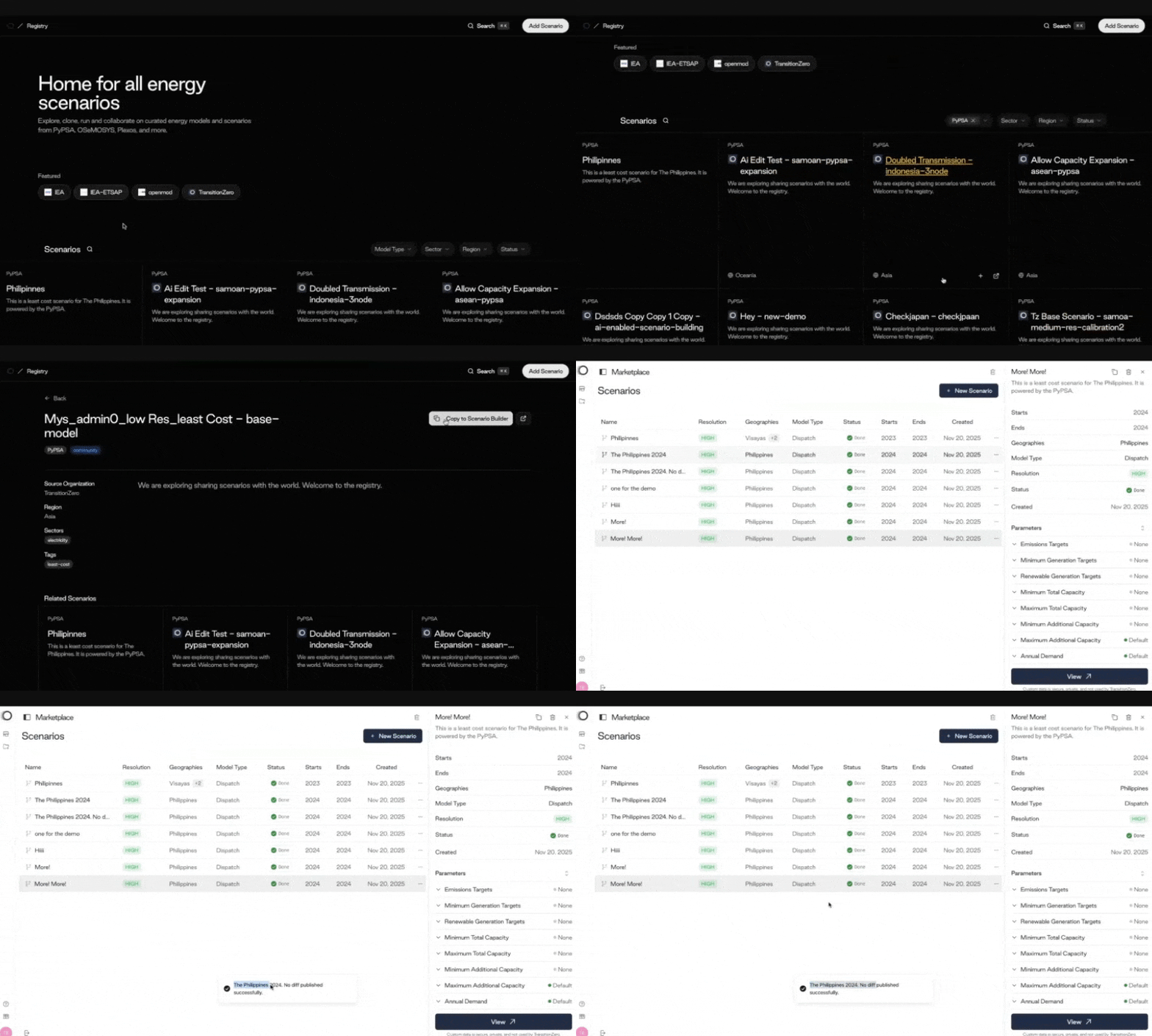
This team proposed a scenario marketplace concept designed to bring together publicly available scenarios from organisations across the modelling community. The Registry would allow users to search, filter, and explore results, and eventually publish their own scenarios directly from Scenario Builder. A particularly compelling feature is the ability to copy a Registry scenario straight into a user’s workspace, enabling seamless comparison, adaptation, and reuse of trusted public models.
Using satellite monitoring to track DRI production more accurately
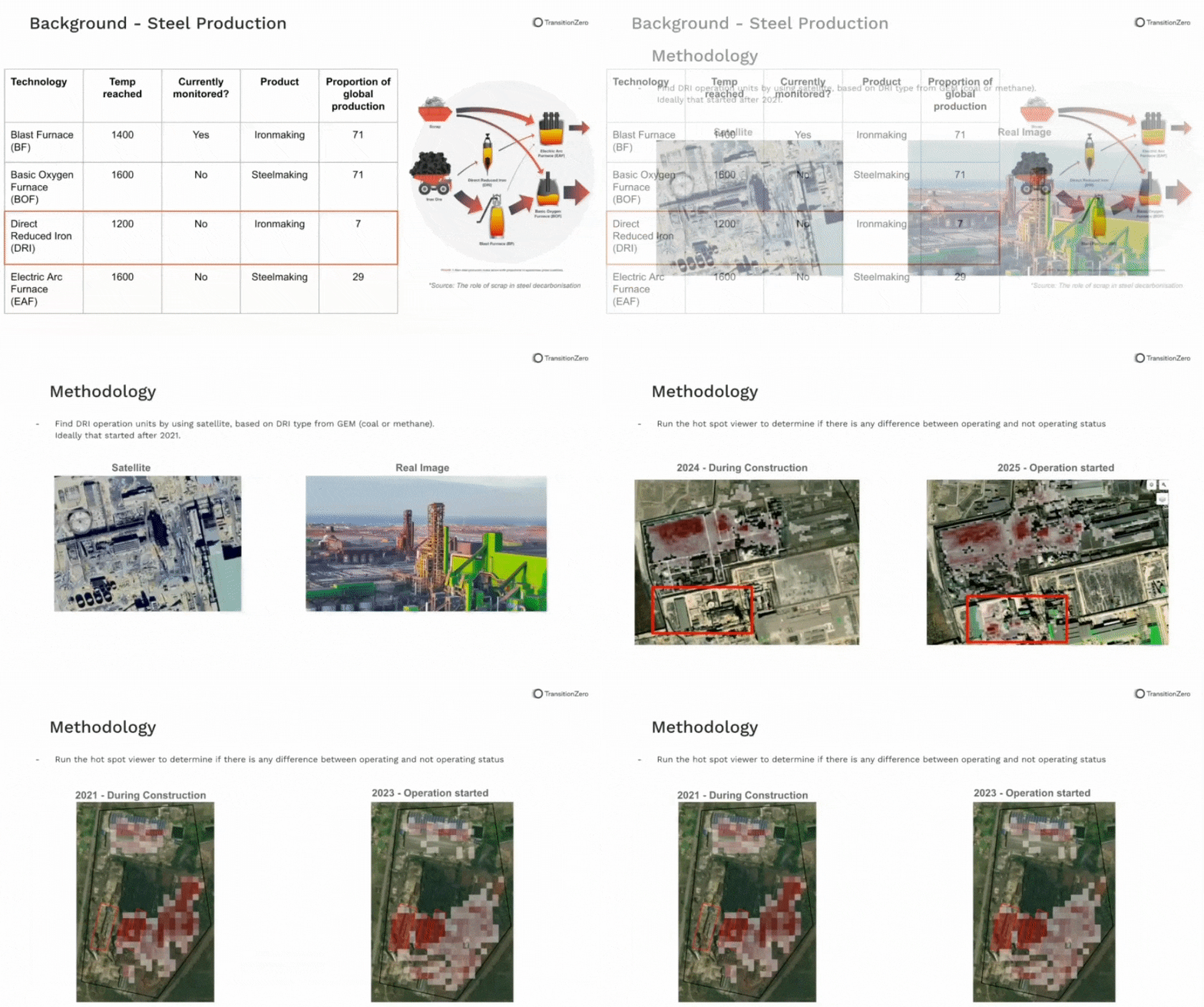
The team explored how satellite monitoring can provide a more accurate and timely view of Direct Reduced Iron (DRI) production, taking advantage of the fact that DRI units are typically outdoors and emit detectable heat signatures. By testing spatial monitoring methods against Global Energy Monitor’s Iron and Steel Tracker, they confirmed that satellite imagery can reliably identify both new installations and plants in active operation, including detecting a DRI plant that began running in 2024 through observed thermal hotspots. This approach offers a stronger alternative to traditional capacity-factor assumptions and enables a more precise and direct measure of real-time industrial activity.
What’s next?
Once again, Neptune Days prove that the team is bursting with innovative and impactful ideas on how to improve the data, technology, and user experience of products at TransitionZero. With only two days of collaborative work between teams, it shows that prototypes can be brought to live surprisingly quickly.
The team is already looking forward to the next Neptune Day in 2026. Want to know more about any of these projects? Get in touch!