Back to Insights
Analysis
March 25, 2026
Japan could double its clean electricity without much waste
Japan could expand renewable energy to 50% of electricity by 2040 without wasting clean power, according to new modelling of the country’s future power system.
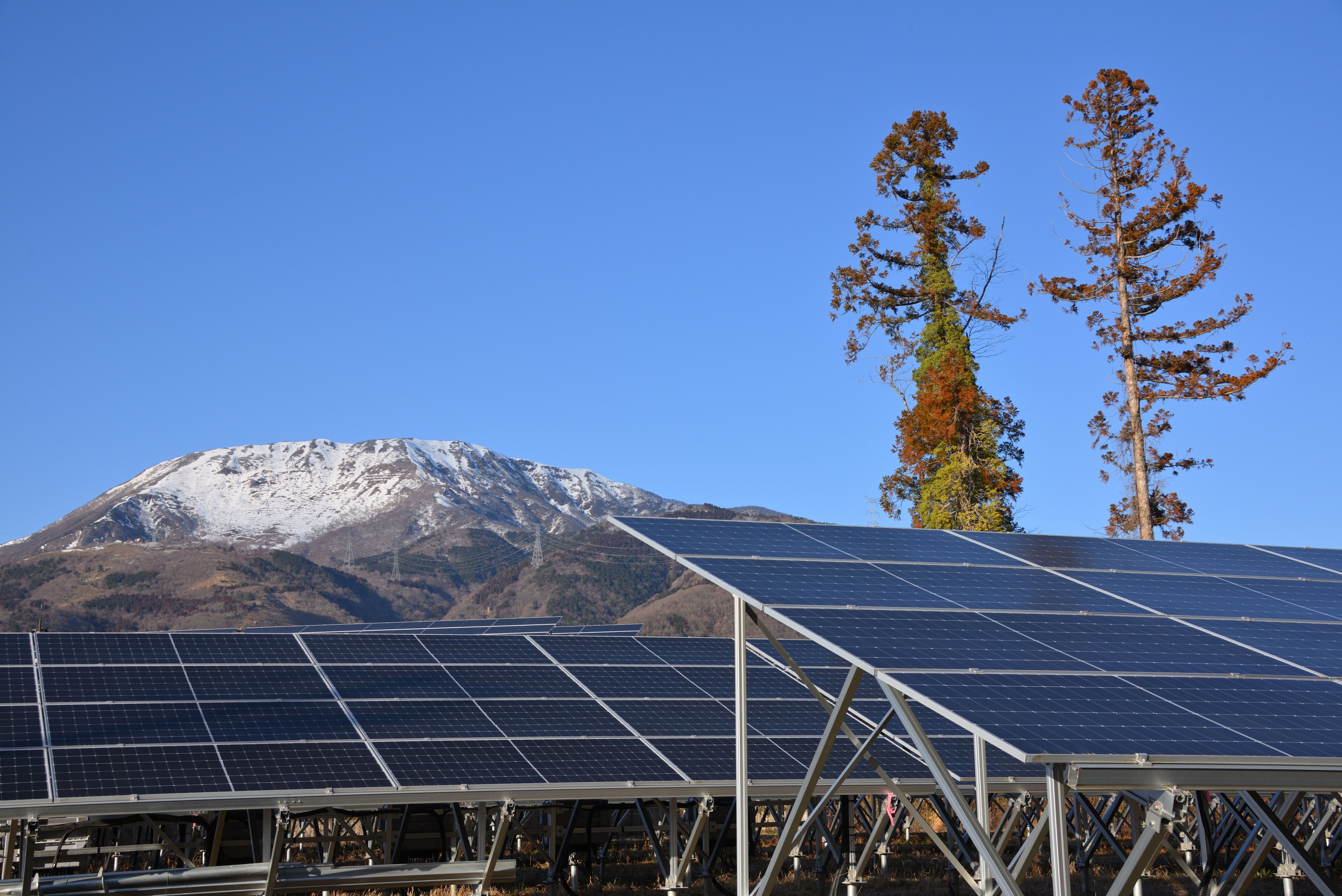
Even if the share of variable renewables rose in Japan from 13% in 2024 to 35% in 2040, the curtailment rate for renewable electricity generators could stay at 1.5% - virtually the same as today.
Summary

Japan aims to generate 40–50% of its electricity from renewables by 2040 under the government’s 7th Strategic Energy Plan (SEP7), but investors have worried that much of this clean electricity could be curtailed — meaning wind and solar generation is shut down when supply exceeds demand or grid capacity. Earlier modelling by Japan’s grid coordinator in 2021 suggested curtailment rates could more than double from around 1.4% in 2024 to 3.7% by 2040, raising concerns that renewable projects could become financially unattractive.
New modelling by TransitionZero, conducted with ClientEarth using updated SEP7 targets, suggests this outcome is not inevitable. The analysis finds that renewable curtailment could remain close to today’s levels — around 1.5% — even if renewables supply half of Japan’s electricity by 2040, provided the power system is configured differently. Optimising the distribution and operation of thermal power plants allows the grid to absorb significantly more renewable electricity than previously expected.
Under this optimised system, emissions fall by 46% and total system costs decline by US$13.5 billion compared with earlier scenarios. However, if renewable penetration rises much further — to around 74% — curtailment increases sharply to about 11.2%, potentially threatening project economics unless the power system introduces additional flexibility such as long-duration energy storage, interconnector upgrades, or dispatchable nuclear power.
What is renewable curtailment?
Renewable curtailment is the intentional reduction of electricity from sources like wind or solar because the power system cannot absorb or deliver it. This study focuses on ‘economic’ curtailment, where the cost of adding more renewable generation exceeds its value across the system, and ‘inter-zone’ curtailment, where transmission lines between regions are full. We do not consider local grid constraints within a single region, as our model represents each region as an aggregated zone.
The gap between Japan’s clean energy goals and grid reality
The Japanese government’s 7th Strategic Energy Plan (SEP7), published in 2025, pledges to raise renewables to 40-50% of generation by 2040, which is a modest increase from the 36-38% target for 2030 set in 2020’s SEP6. However, 2021 modelling by Japan's national grid coordinator, Organisation for Cross-regional Coordination of Transmission Operators (OCCTO) suggested that even with grid investment, curtailment rate might more than double from 1.4% in 2024 to 3.7%. While this 2021 study predates the 2025 SEP7 and may not fully reflect present-day assumptions, it remains the most recent analysis for the 2040 timeframe. Combined with the government’s parallel push for traditionally inflexible nuclear power, developers fear rising curtailment rate will undermine project economics and jeopardize SEP7 targets.
To put this in perspective, OCCTO’s earlier implied curtailment equates to the annual electricity consumption of roughly 2.2 million Japanese households. In fuel terms, this corresponds to roughly US$500 million in liquefied natural gas import savings. From a project economics perspective, our analysis of offshore wind in Hokkaido — the region most affected — shows that curtailment increases the levelised cost of electricity (LCoE), by roughly 10%, rising from US$64.9/MWh to US$71.3/MWh compared with a no-curtailment scenario.
Modelling alternative futures for Japan’s power system
In the absence of a renewed assessment from official institutions, TransitionZero partnered with ClientEarth to replicate OCCTO’s 2021 modelling of Japan’s 2040 power system. Drawing on OCCTO’s published input data (including demand and renewable profiles) and model outputs (such as generation data), we revised the underlying assumptions to align with SEP7 targets and assess the impact on renewables. We explored three visions for Japan's 2040 power system, each with different shares of nuclear, thermal, and renewables.
High-RES SEP7
A high-renewables variant of SEP7 with the 10% of demand in the original SEP7 that could be met by either renewables or thermal generation is supplied entirely by renewables. As a result, renewables account for 50% of total generation, while nuclear provides 20% and thermal plants supply the remaining 30%.
Nuclear-delayed SEP7
A delayed nuclear expansion variant of SEP7 assumes nuclear power provides only 12% of total generation instead of the originally envisaged 20%. Renewables still reach the 50% maximum share endorsed by the Japanese government as of 2025, but thermal plants must rise to 38% to fill the gap.
90% Clean
A scenario depicting a power system with 90% carbon-free generation, featuring a moderate nuclear share of 16%, a material expansion of renewables beyond the SEP7 target from 50% up to 74%, and the remaining 10% supplied by thermal plants.
Model and scenario set-up
We modelled Japan’s electricity system in 2040 across all 8,760 hours of the year for each of the 9 mainland regional grids, accounting for interconnectors. The model is first calibrated to replicate the behaviour of all assets as modelled in OCCTO’s scenario exploring the deployment of 45 GW of offshore wind. Building on this baseline, we then modified key modelling parameters and the capacity mix step-by-step (following the sequence illustrated below) to align the system with the policy ambitions of the 2025 SEP7 and with alternative scenarios explored in this study.
TransitionZero has conducted the modelling using our in-house expansion of the PyPSA (Python for Power System Analysis) platform. Our Tech team will over the coming months incorporate the new features developed for this study into our main product, Scenario Builder, enabling external users to conduct similar analysis using our web-based interface for modelling Japan.
Curtailment could be lower than OCCTO’s 2021 estimate
According to our modelling, the High-RES SEP7 scenario shows a nationwide curtailment rate of 1.5% in 2040. This is less than half the 3.7% originally estimated by OCCTO in its 2021 analysis. In fact, this lower rate is achieved even with a higher renewable generation share (50%) than the 42% used in 2021 OCCTO analysis.
Diving deeper, our driver-of-change analysis shows that, despite higher assumed nuclear output, curtailment remains low primarily because of the changed thermal composition. We substituted OCCTO’s original unabated thermal composition with one that undergoes a steady phase-out between present and 2050. By allowing the model to fill any resulting gaps with abated thermal capacity based on regional demand-supply needs, we produced a more optimised mix in both total capacity and geographic distribution. This reduced minimum generation requirements, enabling the system to absorb more renewable output.
High-RES SEP7 cuts emissions and saves system costs
Compared with the original OCCTO scenario, the High-RES SEP7 scenario reduces emissions by 46%. This reflects both the reduction in thermal generation share from 36% to 30%, in line with SEP7 targets, and the substitution of unabated thermal capacity with abated alternatives, which contributes significantly to the overall emissions reduction.
Beyond emissions, the High-RES SEP7 scenario achieves significant total cost savings of US$13.5 billion. These savings are driven predominantly by lower net thermal capital (cost savings of US$11.1 billion) and operational expenditure (cost savings of US$9.7 billion), as not only less thermal capacity is built but built where most needed, which more than offsets the higher investment on renewables (US$4.9 billion additional spending) and batteries (US$2.6 billion additional spending).
It should be noted, however, that both the emissions and cost outcomes are sensitive to the underlying assumptions for abated thermal technologies. On emissions, the modelled reduction depends on co-firing ratios (20:80 for hydrogen-to-gas and 50:50 for ammonia-to-coal) and carbon capture rates (80% for gas plants) that remain largely unproven at commercial scale. If these assumptions prove optimistic, the 46% reduction figure could overstate the actual benefit. Similarly, the uncertainty inherent in expenditure projections for these technologies could shift the overall cost savings.
Hokkaido’s curtailment remains a structural hurdle
Most curtailment continues to occur in northern Hokkaido under both the original OCCTO and the High-RES SEP7 scenarios, while curtailment in southern Kyushu falls sharply. This suggests that Hokkaido’s supply–demand imbalance is structural and cannot be resolved as easily through thermal re-optimisation as in Kyushu.
That said, our approach revises the 2040 system through marginal changes to OCCTO’s 2021 scenario rather than redesigning the full capacity mix from today’s system. A full re-optimisation of the 2040 generation mix would likely produce different results and remains a subject for future research.
High renewable targets require new flexibility to remain viable
The Nuclear-delayed SEP7 produces curtailment rate identical to High-RES SEP7, both sitting at 1.5%, as the two share many underlying assumptions. Nuclear-delayed SEP7 likewise delivers substantial emissions reductions relative to the OCCTO baseline, though emissions are marginally higher than High-RES SEP7 because thermal generation compensates for lower nuclear output.
By contrast, in the 90% Clean energy scenario — featuring 74% renewables and 16% nuclear — curtailment rises by an order of magnitude, from 1.5% in High-RES SEP7 to 11.7%. At this level of renewable penetration, curtailment becomes structural and threatens project economics for investors, underscoring the need for further policy intervention which we will be discussing in our second blog.
Conclusion
Our study offers two key takeaways:
- 50% renewables can coexist with a low curtailment rate. Japan can expand renewables to half of its total generation without significant power waste by strategically distributing thermal plants to complement renewable resources.
- Very high renewable shares will require additional flexibility. Pushing penetration to 74% will require new flexibility measures. Without them, curtailment could rise sharply, making new projects financially infeasible for investors.
This blog is the first in a two-part series based on research by Alex Luta and Joel Yap for ClientEarth. Written by by Joel Yap, Energy Systems Modeller. Read part two here.